

Building a Future
Where Every Child
with Sickle Cell Disease
Can Thrive
Sickle Cell Partnership for Advocacy, Research, and Knowledge (SPARK) is a Med Aditus Foundation initiative born from a simple belief: sustainable change cannot be imposed; it must be cultivated through authentic, respectful partnerships that challenge existing inequities.
The human cost is tangible: fragmented care, low awareness, persistent stigma, chronic pain, frequent hospitalizations, and significant socio-economic strain.
Sickle Cell Disease is a group of inherited blood disorders marked by abnormal hemoglobin, the protein in red blood cells that carries oxygen. When deprived of oxygen, red blood cells become hard, sticky, and crescent-shaped—getting stuck and blocking blood flow. This leads to severe pain episodes, organ damage, and serious health complications.
SCD is not contagious. It’s passed through families when a child inherits the sickle cell gene from both parents. In sub-Saharan Africa, particularly Kenya, the burden of illness is highest, yet comprehensive care remains out of reach for most families.
Source: Blood, 2025
Source: Kenya Ministry of Health (2023)
Source: Blood, 2025
Our Three-Phase Approach

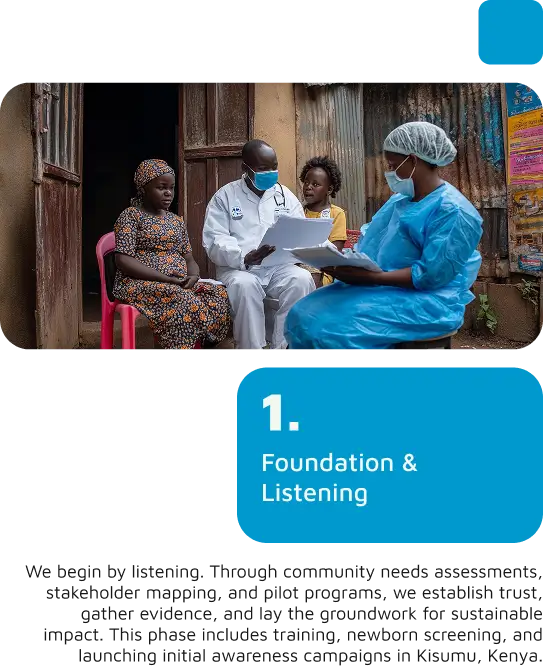
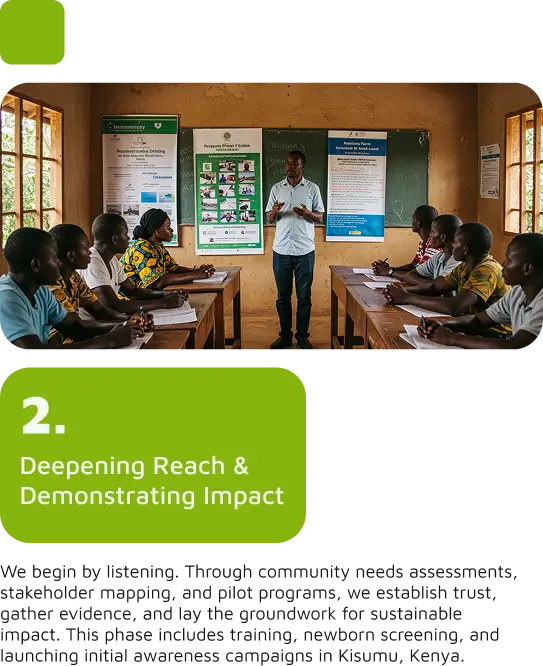
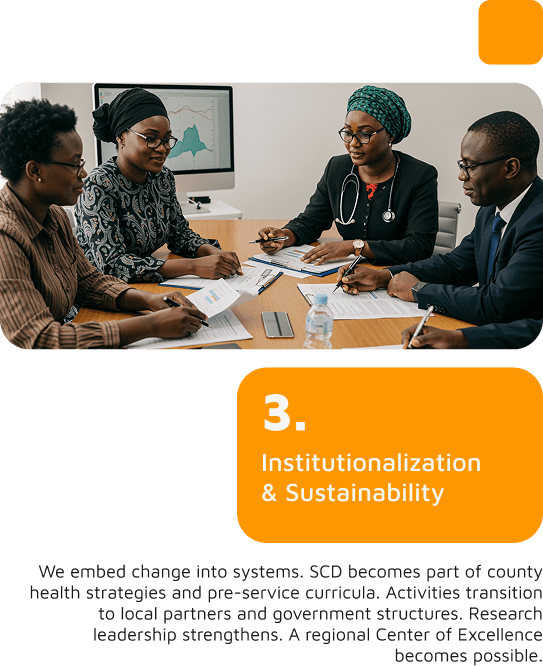
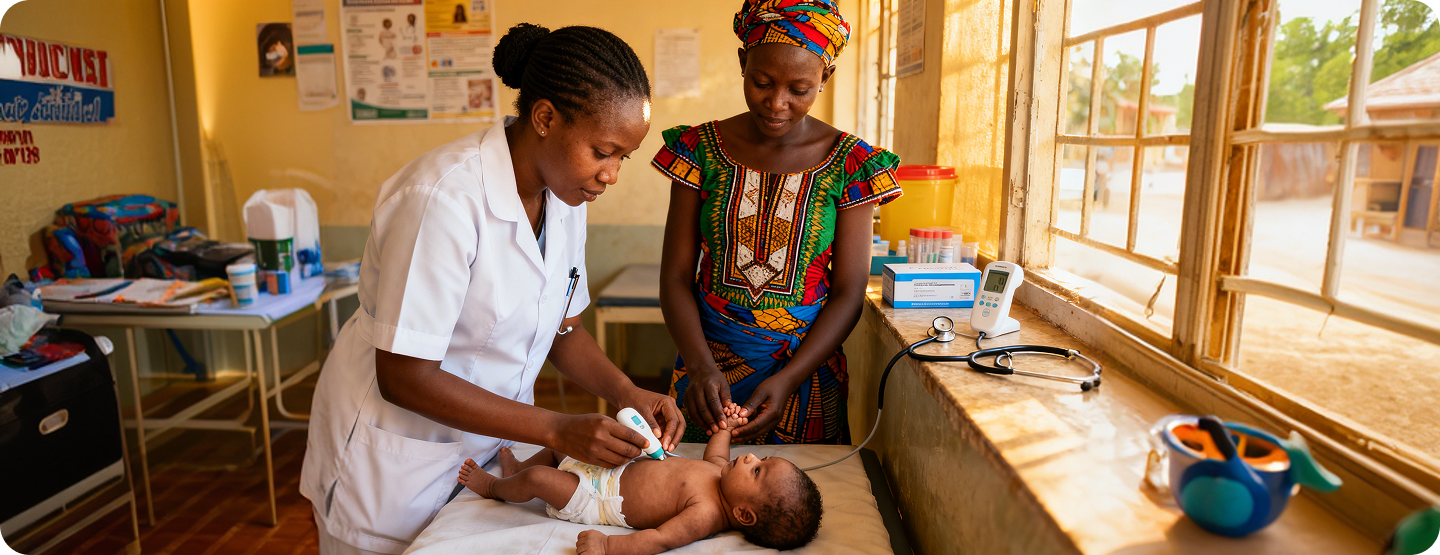
Early Diagnosis & Screening
The Challenge
Most children with SCD in Kenya are not diagnosed until they experience a life-threatening crisis.
Our Approach
We will partner with Jaramogi Oginga Odinga Teaching & Referral Hospital (JOOTRH) and sub-county health facilities to pilot expanded newborn screening programs in Kisumu County, Kenya. We will assess feasibility, identify gaps, and generate data on screening coverage and outcomes. We will advocate for improved access to reliable, affordable diagnostic tools, including immuno test systems that will provide rapid results in rural environments.
The Impact
Early diagnosis enables timely intervention, family counseling, and preventive care that can dramatically improve health outcomes and quality of life.
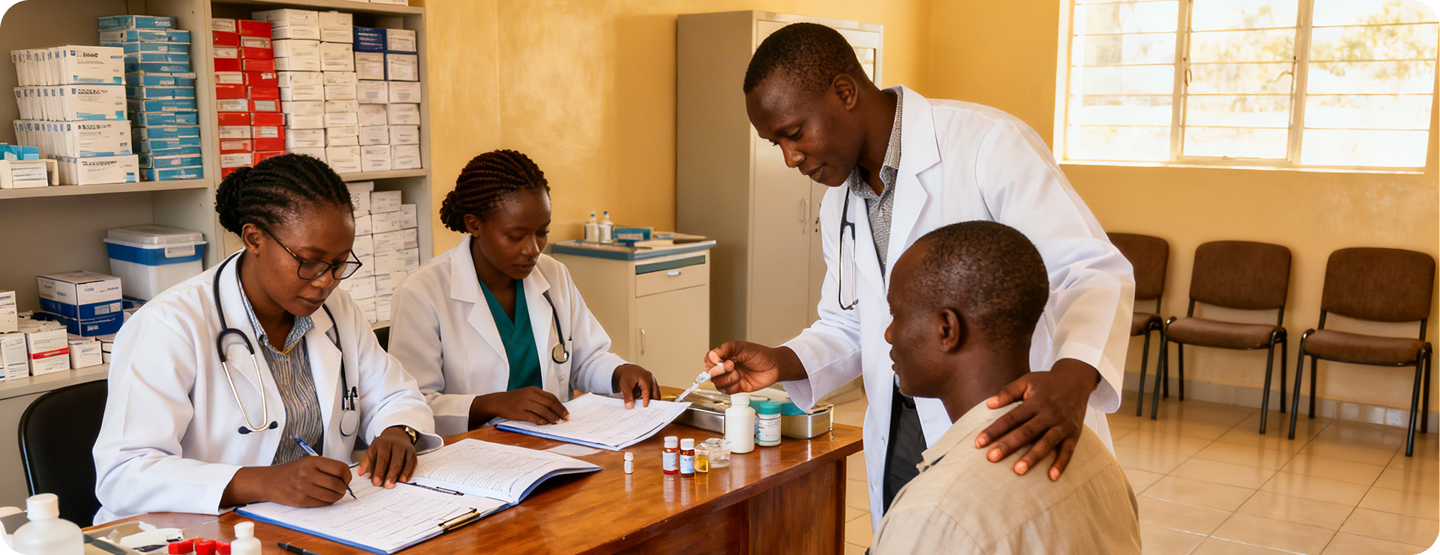
Comprehensive Care & Treatment Access
The Challenge
Essential medications like hydroxyurea are inconsistently available. Standardized care protocols are lacking.
Our Approach
We will advocate for consistent medication availability and support the development and rollout of standardized care protocols covering pain management, crisis prevention, infection control, and blood transfusion services. Protocols will be introduced in pilot sites, then scaled county-wide.
The Impact
Improved access to treatment reduces complications, hospitalizations, and the devastating impact of pain crises on daily life.

Psychosocial Support & Education
The Challenge
The emotional burden of SCD extends far beyond physical symptoms. Stigma, isolation, and lack of understanding compound suffering.
Our Approach
We will develop peer support networks, caregiver discussion groups, and counseling services that will build resilience. Community-wide education campaigns will address stigma through culturally resonant media, including comics, audio spots, and storytelling that will dispel myths and foster empathy.
The Impact
Families find community. Children attend school with confidence. Stigma decreases. Mental health improves alongside physical health.

Advocacy for Policy Change
The Challenge
Without political will and budget allocation, SCD remains invisible in health planning.
Our Approach
We will support the formation of local SCD advocacy groups and train youth and caregiver ambassadors to engage in public dialogue. Working closely with Kisumu County Officials, we will spotlight SCD as a health priority, driving its integration into policies, budgets, and care packages.
The Impact
Systemic change that outlasts any single program. SCD care becomes a government responsibility, not a charitable afterthought.

Applied Research and Knowledge Sharing
The Challenge
Interventions often lack local evidence. Global research doesn’t reflect Kenyan realities.
Our Approach
We will partner with institutions like the Great Lakes University of Kisumu (GLUK) to co-lead operational research on SCD prevalence, care-seeking behavior, and intervention outcomes. Findings will be shared through community feedback loops, academic forums, and open-source platforms.
The Impact
Local knowledge informs global discourse. Interventions are evidence-based and contextually appropriate. Communities see themselves in the data.
How SPARK Creates Change
SPARK will operate through five core components, each designed to address critical gaps in the SCD care continuum while strengthening the broader health system.
Our Delivery Model
SPARK will be implemented through a phased delivery approach supported by a Hub–Spoke–Bridge model. This structure enables coordinated service delivery, strengthens community connections, and ensures that early successes can be sustained and expanded over time.
The Hub
The Hub
The Hub provides technical oversight, data coordination, and quality assurance, ensuring consistent standards and supporting partner facilities across the network.
The Spokes
The Spokes
Spokes deliver frontline services such as screening, education, and patient support, bringing care closer to the communities that need it most.
The Bridge
The Bridge
The Bridge links communities to services through outreach and trusted local engagement, improving awareness and strengthening continuity of care.
The Hub
The Hub
JOOTRH serves as the central hub for advanced diagnostics, specialist training, and complex case management.
The Spokes
The Spokes
Sub-county hospitals, health centers, and community-based organizations deliver routine screening, primary care, community engagement, and follow-up support.
The Bridge
The Bridge
Mobile health outreach and Community Health Volunteers (CHVs) deliver services and education directly within underserved communities, bridging geographical and financial barriers.
The Hub
The Hub provides technical oversight, data coordination, and quality assurance, ensuring consistent standards and supporting partner facilities across the network.
The Spokes
Spokes deliver frontline services such as screening, education, and patient support, bringing care closer to the communities that need it most.
The Bridge
The Bridge links communities to services through outreach and trusted local engagement, improving awareness and strengthening continuity of care.